
Preliminary UXO Risk Assessment
Identify Potential UXO Risk Before Work Begins
A Preliminary UXO Risk Assessment (PRA) is the first step in determining whether a site may be affected by Unexploded Ordnance (UXO) and whether further investigation or risk mitigation is required.

What is Preliminary UXO Risk Assessment
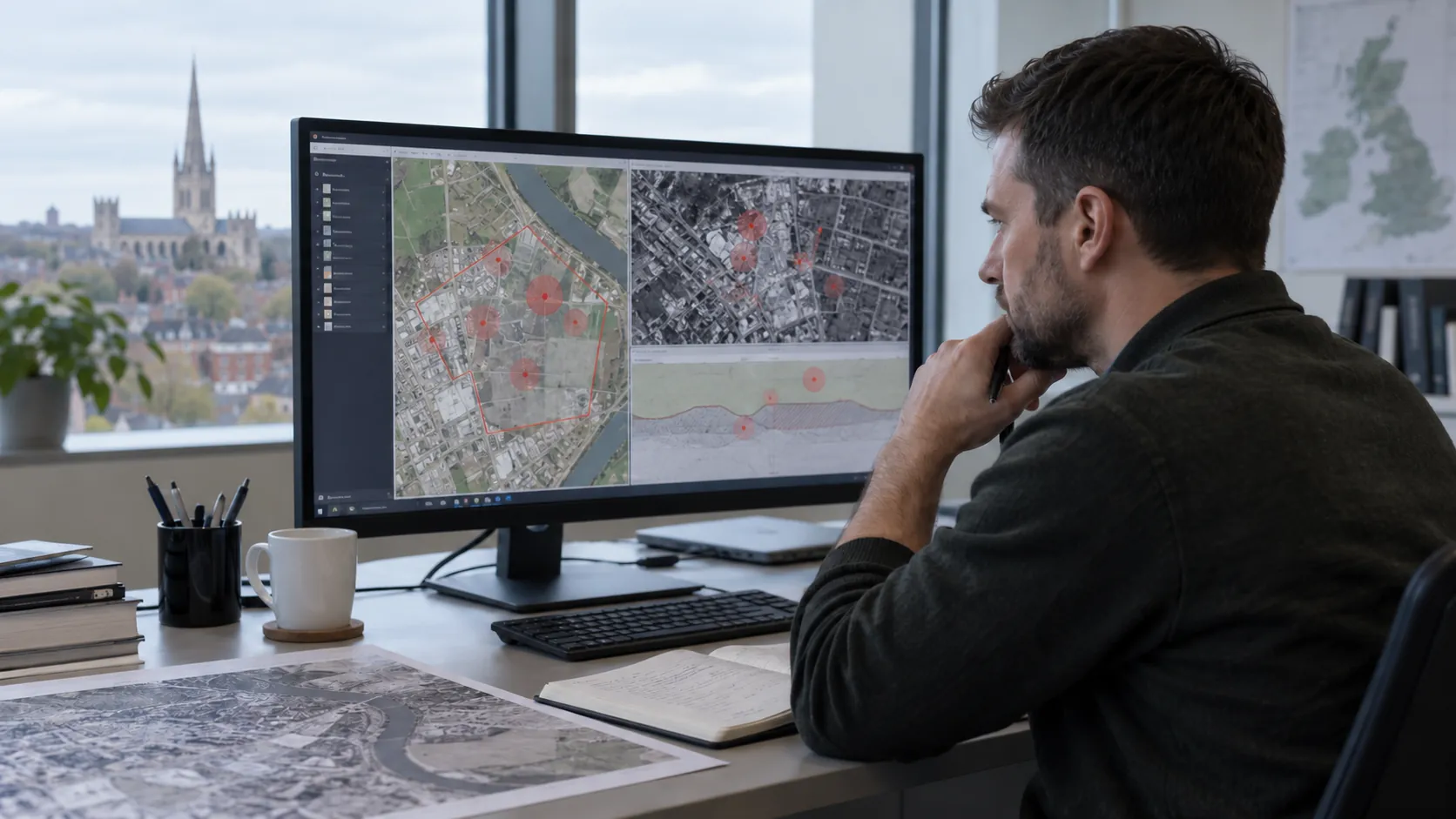
A Preliminary UXO Risk Assessment is a desktop-based assessment of a site's potential UXO risk.
The assessment examines the historical use of the site and surrounding area to determine whether there is evidence of activities that could have resulted in unexploded ordnance being present.
The findings are used to establish whether a potential UXO risk exists and whether a more detailed assessment is required.
Key Points

How long it takes
1–2 working days.

What it tells you
whether there is an identified UXO risk that needs investigating further, or whether no records of UXO risk have been identified.

What it doesn't tell you
it can't state that your site is free from UXO, and it can't detail the specifics of the risks, as it is a summary of potential risks.

What you can do with it
use it to confirm you have assessed the UXO risk, then proceed to additional research or, where the risk is low, without the need for it.

Why it's important
it's a fast, cost-effective way to establish whether additional research is needed at all, which can save substantial budget and time on your project.
Why It Matters
UXO can remain buried for decades and may still present a significant hazard if disturbed. Excavation, piling, drilling, trenching and ground investigation can all potentially encounter buried explosive ordnance.
However, not every site has the same level of UXO risk. A Preliminary UXO Risk Assessment helps establish this risk at an early stage.
Understand the potential risk
Establish whether there is evidence of UXO contamination affecting the site.

Make informed decisions
Understand whether further UXO investigation or mitigation is likely to be needed.
Avoid unnecessary costs
Avoid applying expensive UXO mitigation where the evidence does not justify it.
Protect personnel and assets
Ensure potential explosive hazards are considered as part of your project's risk management.
Our Approach
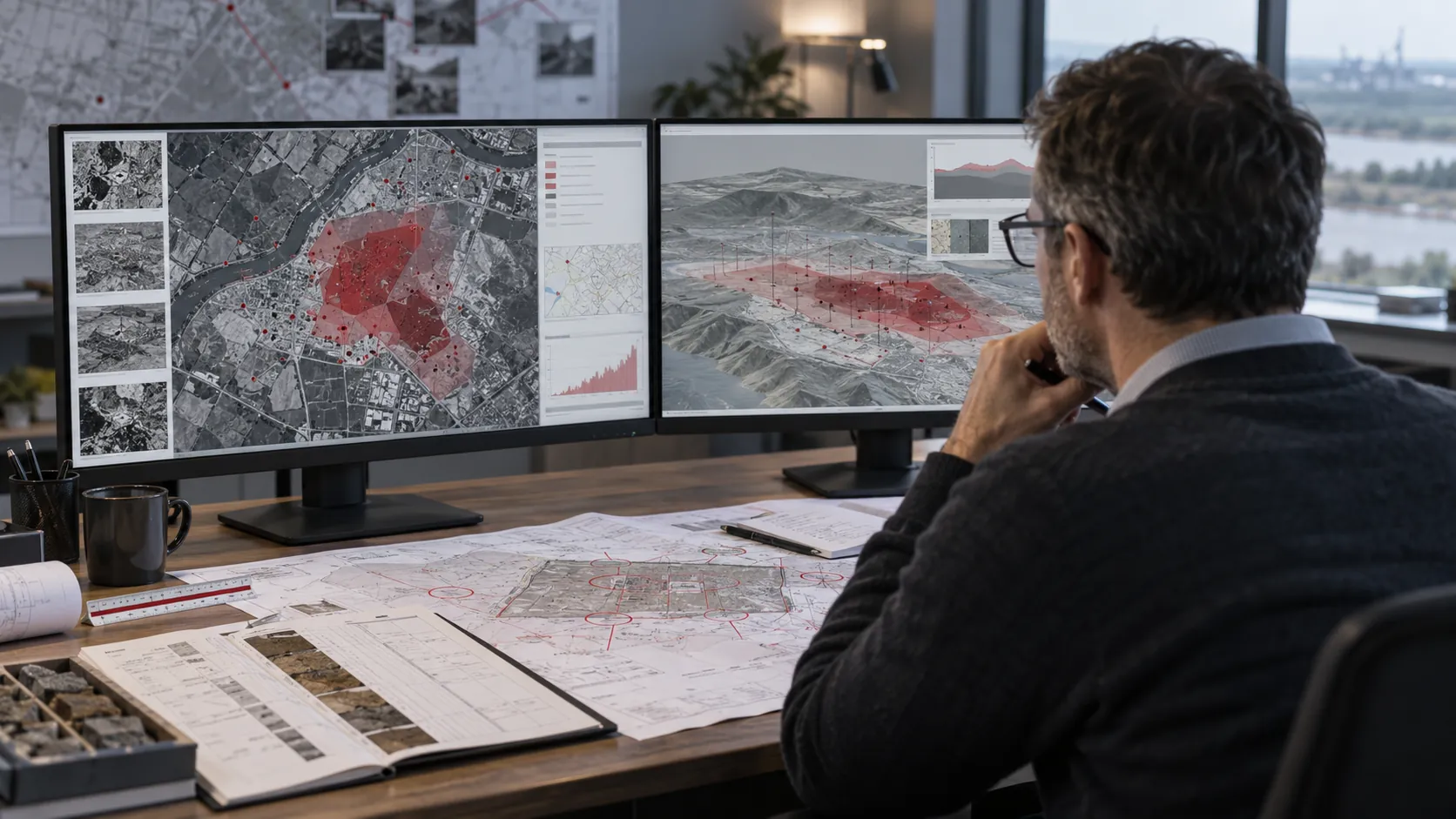
Our bespoke assessments combine historical research, specialist analysis and practical EOD knowledge. They are not based solely on automated data or generic risk maps, but reviewed by a team with UXO and EOD qualifications.
1
Research
Historical archives, maps, aerial photography and documentary resources.
2
Analyse
Bombing records, military activity, previous UXO research and our internal UXO risk database.
3
Assess
Evidence considered against your site's location, land use and proposed works.
4
Report
A clear, site-specific digital report within 1–2 working days.
5
Recommend
Proportionate next steps, based on the level of risk identified.
What You'll Receive
A clear, site-specific digital report, provided within 1–2 working days from order, that assesses the available historical evidence and the potential UXO risk affecting your site.
It can be used to inform project planning and future UXO risk management decisions.
- Site location and historical land use
- Historical bombing and military activity
- Potential sources of UXO contamination
- Historical maps and documentary evidence
- Relevant UXO information and records
- The proposed site activities
- Potential implications for intrusive works
- An overall assessment of the potential UXO risk
- Recommendations for any further action
RMS UXO Expertise
Why Choose RMS UXO?
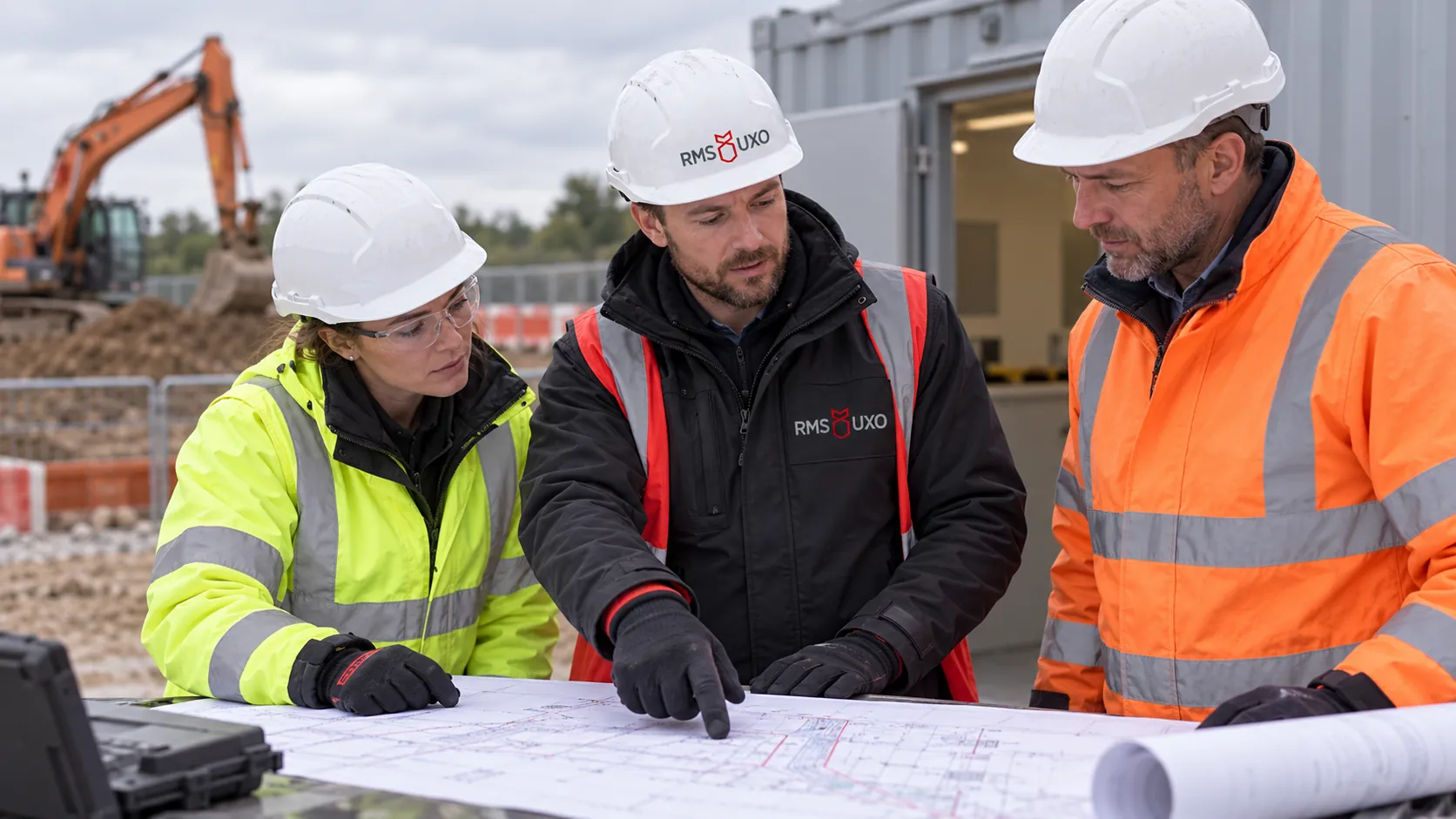
RMS UXO combines historical research with specialist UXO and EOD expertise to provide practical, evidence-based assessments, giving you a clear understanding of the potential UXO risk rather than a generic risk classification applied to an entire site.
We understand that UXO mitigation can have a significant impact on project costs and programme. Our objective is to identify where a genuine risk exists and recommend appropriate measures to manage it, while avoiding unnecessary expenditure where the evidence does not support it.
When is a Preliminary UXO Risk Assessment needed?
Ideally, a Preliminary UXO Risk Assessment should be completed at the start of a project, before site investigation, excavation, piling, drilling or other intrusive ground works begin.
The assessment investigates whether the site has been affected by:
- Historical bombing during wartime
- Anti-aircraft activity
- Military training
- Former military sites
- Ammunition storage or handling
- Aircraft crashes
- Defensive positions
- Former firing ranges
- Industrial activities involving explosives
- Historical disposal or burial of ammunition
- Other activities associated with explosive ordnance
Our aim is simple: to identify genuine UXO risk without recommending unnecessary investigation or mitigation.
RMS UXO
”
A Bespoke Assessment for Your Site
Every site is different, which is why we do not take a one-size-fits-all approach to UXO risk assessment. A site may have a history suggesting a potential risk, but the actual risk can vary considerably depending on its location, historical land use, depth of proposed works and the type of development being undertaken.
For example, a residential scheme may require a different consideration of UXO risk from a major infrastructure project involving deep piling or extensive excavation. We therefore consider the nature of the proposed works alongside the historical evidence, so any recommendations are proportionate to the actual risk identified.
What Happens After the Preliminary Assessment?
The outcome of the Preliminary UXO Risk Assessment will determine whether further action is required. Depending on the findings, the assessment may conclude that:
No Further UXO Action Is Required
Where the available evidence indicates that there is no significant UXO risk associated with the proposed works, no further UXO investigation may be necessary.
Further Assessment Is Recommended
Where the historical evidence indicates a potential risk, a Detailed UXO Risk Assessment may be recommended. This provides a more comprehensive assessment of the site and can examine the potential risk in greater detail.
UXO Risk Mitigation May Be Required
Where a significant UXO risk is identified, appropriate UXO risk mitigation measures may be recommended to reduce the risk before or during intrusive works. The level of mitigation should always be based on the level of risk identified.
Preliminary UXO Risk Assessment FAQs
What is a Preliminary UXO Risk Assessment?
A Preliminary UXO Risk Assessment (PRA) is an initial desktop screening assessment. It reviews relevant historical and site information to identify indicators of potential UXO risk and whether further investigation is appropriate.
What does a Preliminary UXO Risk Assessment tell me?
A PRA provides an initial view of the site's UXO risk based on the evidence reviewed. It can identify relevant historical bombing or military activity and help determine whether a Detailed UXO Risk Assessment is required.
When should I commission a Preliminary UXO Risk Assessment?
Ideally, UXO risk should be considered early in a project and before intrusive ground works, such as site investigation. Completing a PRA during early planning or site investigation can help identify potential UXO constraints before they become a programme or cost issue.
How long does a Preliminary UXO Risk Assessment take?
RMS UXO aims to provide its standard Preliminary UXO Risk Assessment within 1–2 working days from order, subject to receiving the information required to complete the assessment.
What information do you need for a Preliminary UXO Risk Assessment?
Typically, RMS UXO will need the site address and postcode, a clear plan showing the site boundary and information about proposed intrusive works. Available geotechnical information, borehole logs and relevant project information can also be helpful.
Start Your UXO Risk Assessment
Understanding potential UXO risk early can help you protect your workforce, plan your project and avoid unnecessary mitigation costs. If you are planning construction, site investigation, excavation, piling, drilling or other intrusive works, speak to RMS UXO about your site.