
Frequently Asked Questions
What types of UXO are there?
UXO can range in size from small arms ammunition to large unexploded bombs weighing more than 2000 kg (unexploded air delivered bombs are often referred to as unexploded bombs or UXBs). All have the potential to cause significant harm to those who encounter them. They can be found on the surface but are more usually buried underground.
Where does UXO come from?
In the UK UXO can originate from:
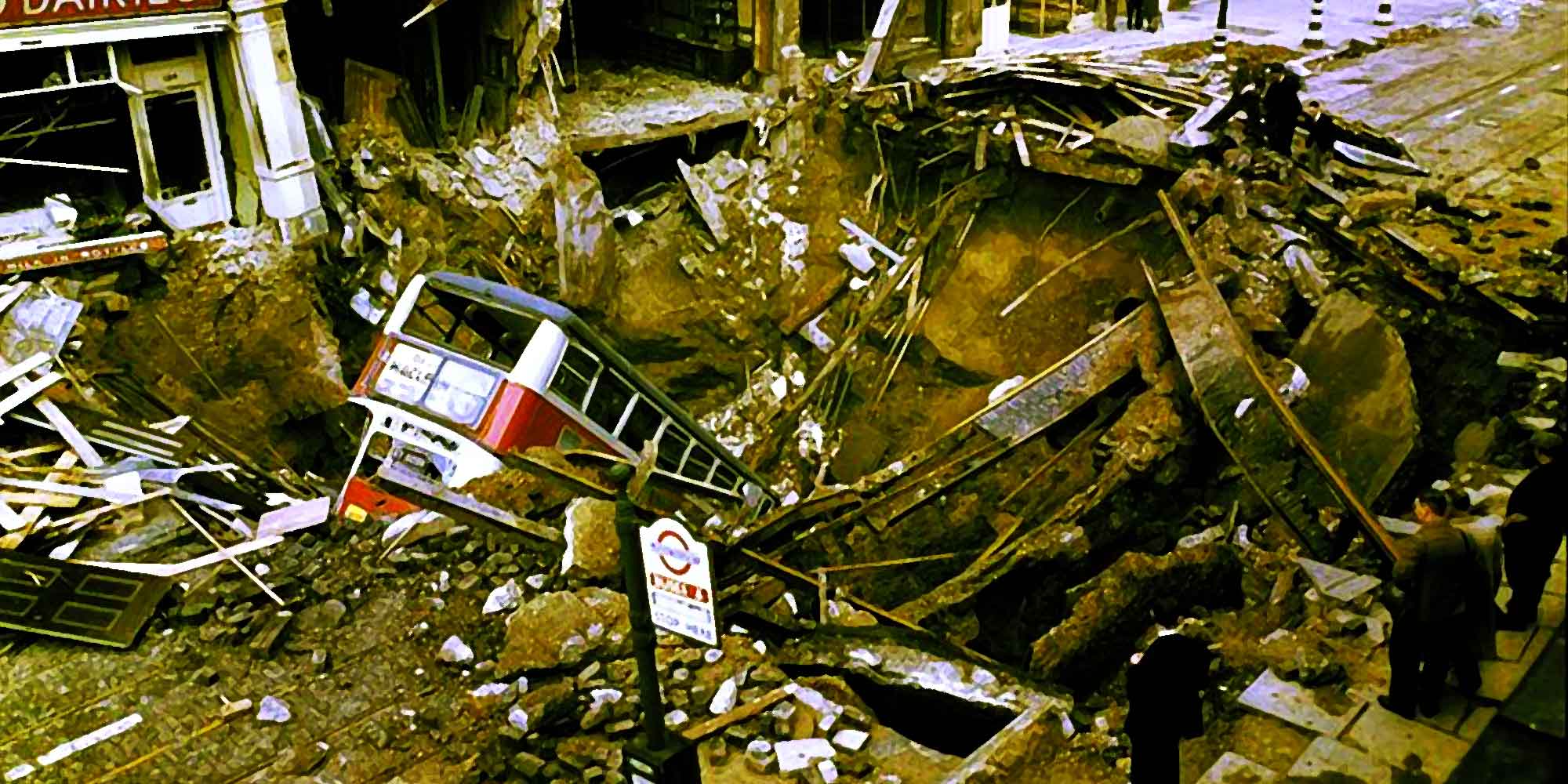
- Ordnance resulting from wartime activities including enemy bombing events during WWI and WWII, long range shelling, munitions deliberately placed as a means of area denial (mine fields, pipe mines etc) and munitions from other home defence activities (anti-aircraft batteries, coastal artillery emplacements, etc).
- Munitions used as part of military training exercises.
- Munitions discard after a military training exercise.
- Munitions dumped as part of a deliberate act, accidental disposal or disposed of ineffectively due to poor working practices during munitions storage and manufacture.
- Time expired / excess munitions discarded after World War 1 and World War 2.
Is there a legal requirement to undertake UXO Risk Mitigation measures?
No, the The management and control of UXO risks in the UK construction industry is not mandatory, however, issues regarding risk management at a site are addressed within existing legislation such as the Construction Design Managements regulations in 1994; CDM, last updated 2015.
The most comprehensive and widely referenced UXO guidance for the construction industry is CIRIA C681 – Unexploded Ordnance (UXO) a guide for the construction industry (Published in 2009).
The approach described within CIRIA C681 follows UK HSE guidance and is based upon the ALARP (As Low As Reasonably Practicable) approach. This approach also recommends that proactive risk mitigation measures are employed whenever possible and reactive measures are only employed as a last option.
The CIRIA guidelines for land based UXO contracting has also been further developed with the introduction of the “Unexploded Ordnance (UXO) Risk Management Guide for Land-Based Projects (C785)” introduced in 2019.
What guidance is available for the construction industry about UXO risk?
CIRIA Report C681 - Unexploded ordnance (UXO) A guide for the construction industry.
This report is an independent construction industry guide produced by the Construction Industry Research and Information Association. It focuses on the needs of the construction industry if there is a suspected UXO on site and covers issues such as what to expect from an UXO specialist.
http://www.ciria.org/ItemDetail?iProductcode=C681&Category=BOOK
The CIRIA guidelines for land based UXO contracting has also been further developed with the introduction of the “Unexploded Ordnance (UXO) Risk Management Guide for Land-Based Projects (C785)” introduced in 2019.
What guidance is available for marine projects which may encounter UXO?
CIRIA Report C754 – Assessment and management of Unexploded ordnance (UXO) risk in the marine environment.
This report from 2015 is an independent guide produced by the Construction Industry Research and Information Association (CIRIA). It focuses on the risk of encountering UXO during inshore or offshore projects and gives guidance as to how the risk can be assessed and managed.
https://www.ciria.org/ItemDetail?iProductCode=C754&Category=BOOK
What is UXO?
UXO stands for Unexploded Ordnance. It refers to explosive items that were used, dropped, fired, launched or otherwise deployed but failed to function as intended. UXO can include bombs, shells, mortars, grenades and other military munitions.
What is the difference between UXO and UXB?
UXO is the broader term for Unexploded Ordnance. UXB means Unexploded Bomb and generally refers specifically to an air-delivered bomb that failed to detonate as intended.
Is my site at risk from UXO?
It depends on the site's location, history, former land use, wartime or military activity, ground conditions and proposed works. A Preliminary UXO Risk Assessment is a sensible first step to screen the available evidence and establish whether further assessment is warranted.
Can UXO be found under an existing building?
Yes. Existing buildings do not automatically remove the possibility of UXO. The relevant question is whether the available evidence supports a credible risk in the ground under the building. This is often referred to as the "J-curve" effect.
Does a site have to have been directly bombed to have a UXO risk?
No. UXO risk can arise from bombing, military training, former military sites, air-defence activity, ammunition storage or disposal and other historic military uses. Nearby bombing and wartime activity can also be relevant.
What happens if UXO is found during construction?
Work should be controlled in accordance with the project's UXO procedures and advice from appropriately qualified personnel. The priority is to protect people and control the area. A competent UXO/EOD specialist can assess the item and advise on the appropriate next steps.
Why should UXO risk be assessed before intrusive works?
Intrusive works such as piling, drilling, excavation and trial pitting can disturb buried objects. Assessing the risk beforehand allows proportionate controls to be planned before work starts.
Do geotechnical investigations increase UXO risk?
Intrusive geotechnical works can potentially disturb buried objects, which is why UXO risk should be considered before drilling, piling, trial pitting and other intrusive activities. Appropriate controls depend on the site's assessed risk and proposed works.
Does piling require a UXO assessment?
Piling involves deep and intrusive ground penetration, so UXO risk should be considered where relevant. Whether a DRA, survey, specialist support or other mitigation is appropriate depends on site history, assessed risk and piling methodology.
Does demolition require a UXO assessment?
It can. Demolition and enabling works may involve excavation, breaking ground and other activities that can disturb buried objects. UXO risk should therefore be considered during pre-construction planning where the site's history or location indicates potential risk.
Should developers assess UXO risk before acquiring land?
Where UXO could materially affect development cost, programme or construction methodology, assessing the risk early can support land and technical due diligence. Understanding the potential constraint before major expenditure can inform commercial and technical decisions.
Can UXO affect planning permission or planning conditions?
Some planning authorities may require UXO risk to be considered or assessed, particularly where there is known or potential historic risk. Requirements vary by project and authority, so planning documentation should be reviewed alongside the UXO assessment.
What sectors does RMS UXO work with?
RMS provides UXO risk management and specialist services for site investigation, construction, infrastructure, renewables, oil and gas and other onshore, nearshore and offshore projects.
What UXO services does RMS provide?
RMS provides Preliminary and Detailed UXO Risk Assessments, UXO risk mitigation strategies, consultancy, project management, technical reporting, EOD and UXO survey expertise, seconded specialists, quality assurance and quality control, peer reviews and related technical services.
How do I get a UXO assessment from RMS?
Contact RMS with the site location, site boundary and details of the proposed works. The team can review the project requirements and advise on the appropriate assessment and next steps.
Does RMS only provide risk assessments?
No. RMS provides a wider range of UXO risk management and consultancy services. Where an assessment identifies credible risk, RMS can support the project with mitigation planning, specialist expertise, surveys and other technical services.
How does RMS approach UXO risk?
RMS takes an evidence-led, site-specific approach. Historical information is assessed alongside technical and project information and interpreted using specialist UXO/EOD knowledge. The aim is to identify genuine risk and recommend proportionate controls.
Why use an independent UXO specialist?
An independent specialist can provide an objective assessment of the evidence and help the project team understand what action is genuinely required. This can support proportionate risk management and reduce the chance of committing resources to unnecessary mitigation.