
Detailed UXO Risk Assessment
A Detailed Assessment of UXO Risk to Your Project
A Detailed UXO Risk Assessment (DRA), also known as a Desk Study, provides a comprehensive assessment and qualification of the potential risk posed by Unexploded Ordnance (UXO) to your project.
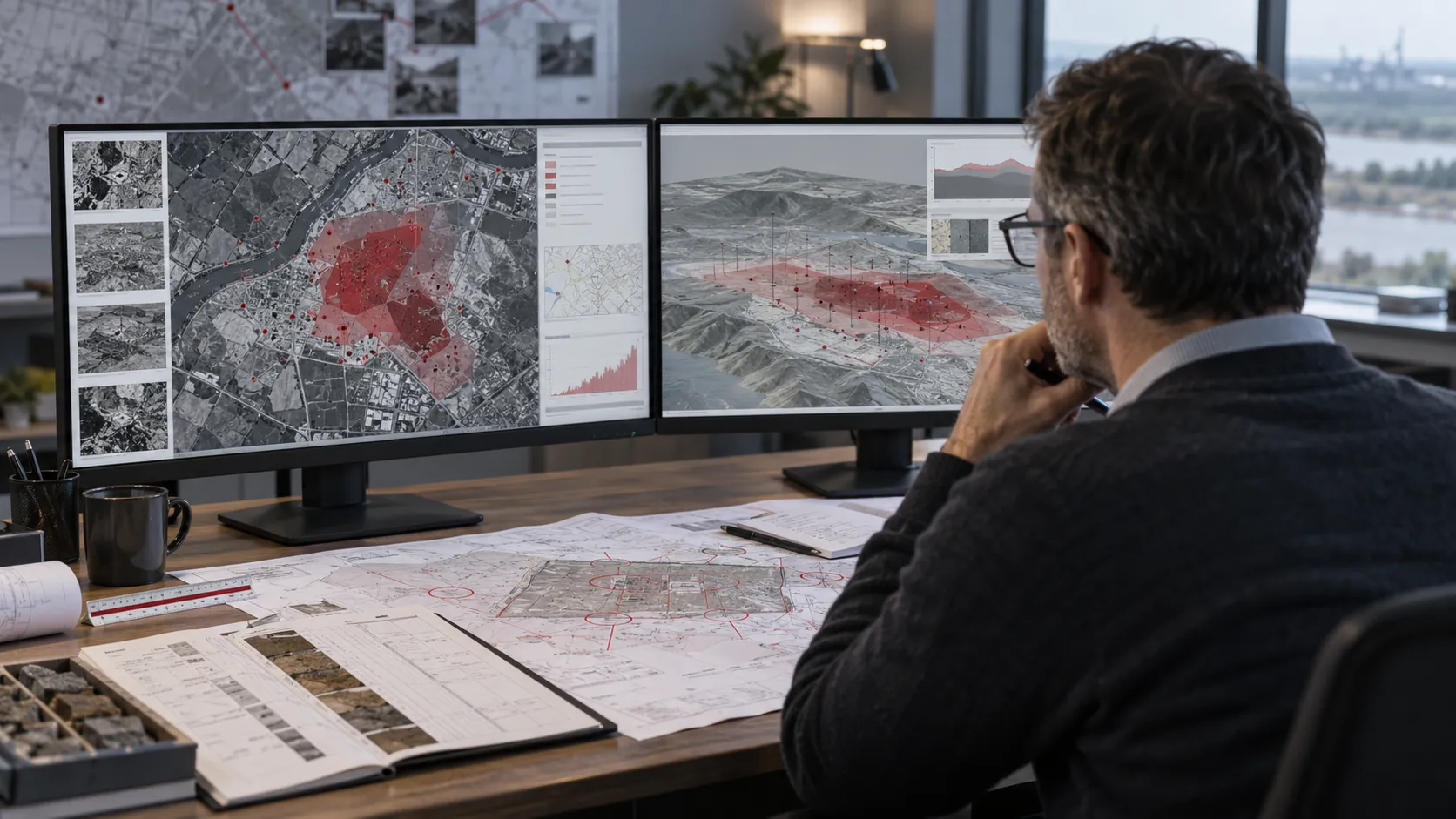
What is Detailed UXO Risk Assessment
Where a Preliminary UXO Risk Assessment identifies a potential UXO risk, a Detailed UXO Risk Assessment provides a much deeper assessment of the available evidence and considers how the identified risk relates specifically to your site, ground conditions and proposed works.
At RMS UXO, we combine extensive historical research with specialist UXO and Explosive Ordnance Disposal (EOD) expertise to provide a detailed, evidence-based assessment of the potential UXO risk affecting your project.
Our objective is not simply to identify that a potential UXO risk exists, but to establish where the risk exists, what may be causing it and how it could affect your proposed works.
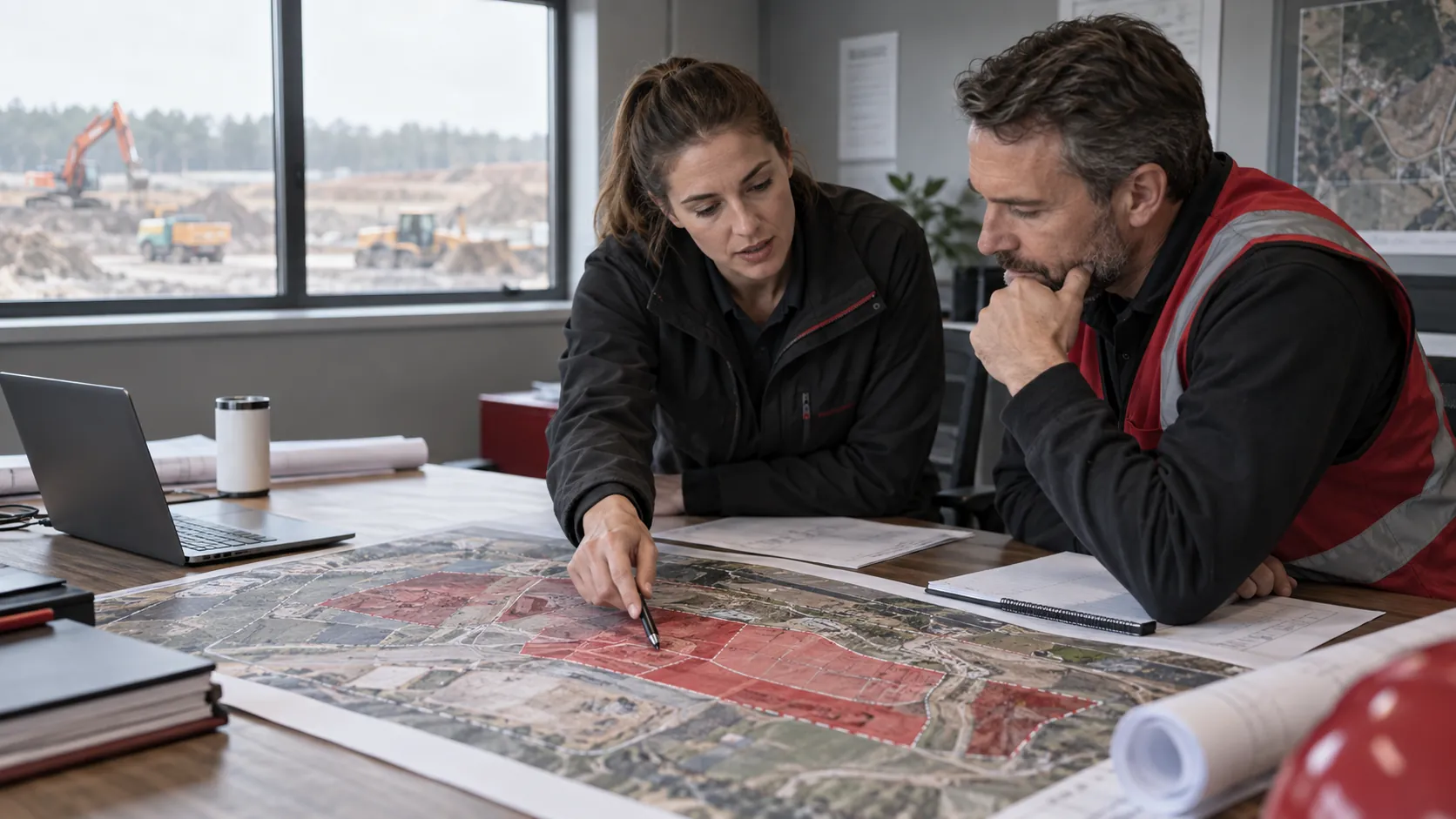
Key Points

How long it takes
5–8 working days.

What it tells you
what the potential risk is, how likely it is, where it could be on your site and what to do to mitigate this risk so you can proceed safely. It will also explain the history of your site (when records allow) to help you understand what could be below ground.

What it doesn't tell you
it can't state that your site is free from UXO, and it can't tell you exactly where the UXO is.

What you can do with it
use it to confirm you have assessed the UXO risk, then proceed to additional mitigation steps or, where the risk has been lowered, without the need for them.

Why it's important
it specifies what the risks are and where they are likely to be on your site so you can isolate and mitigate them. It also provides evidence that you have completed a thorough, expert-led assessment of the UXO risk.
Why It Matters
UXO risk can vary significantly across a project site. Historical records may indicate that a site or surrounding area has been affected by wartime bombing, military activity or other sources of explosive ordnance, but this does not necessarily mean that the same level of UXO risk applies across the entire site.
Our Detailed UXO Risk Assessments are bespoke to the project rather than based solely on generic UXO risk classifications. This can help provide a clearer understanding of:

Where the risk is located
Identify areas of the site where the potential UXO risk may be greater or lower.
What the risk relates to
Understand the historical activities and circumstances that may have resulted in UXO contamination.
How the risk could affect the project
Consider how proposed excavation, piling, drilling, site investigation and other intrusive works could interact with potential UXO.
What mitigation may be appropriate
Help establish whether further investigation or UXO risk mitigation is required and where it should be focused.
Our Approach
Our assessments utilise extensive sources of historical information, assessed by our UXO risk mitigation team and in-house researchers, supported by personnel with EOD qualifications and practical experience of explosive ordnance.
1
Research
Historical archives, maps, aerial photography and imagery, library resources and local research.
2
Analyse
Historical bombing records, military records, previous land use and our internal UXO risk database.
3
Assess
Historical evidence considered alongside current ground conditions and the proposed works.
4
Map
Where appropriate, a bespoke 3D UXO risk map incorporating ground modelling.
5
Recommend
Proportionate next steps, focused where a genuine UXO risk exists.
What You'll Receive
A detailed, site-specific assessment of the potential UXO risk to your project. The assessment considers:
- Historical land use
- Previous military activity
- Historical bombing
- Potential sources of UXO contamination
- Previous development and ground disturbance
- Existing ground conditions
- Proposed construction activities
- Proposed excavation depths
- Piling and drilling requirements
- Site investigation activities
- Other intrusive works that may interact with potential UXO

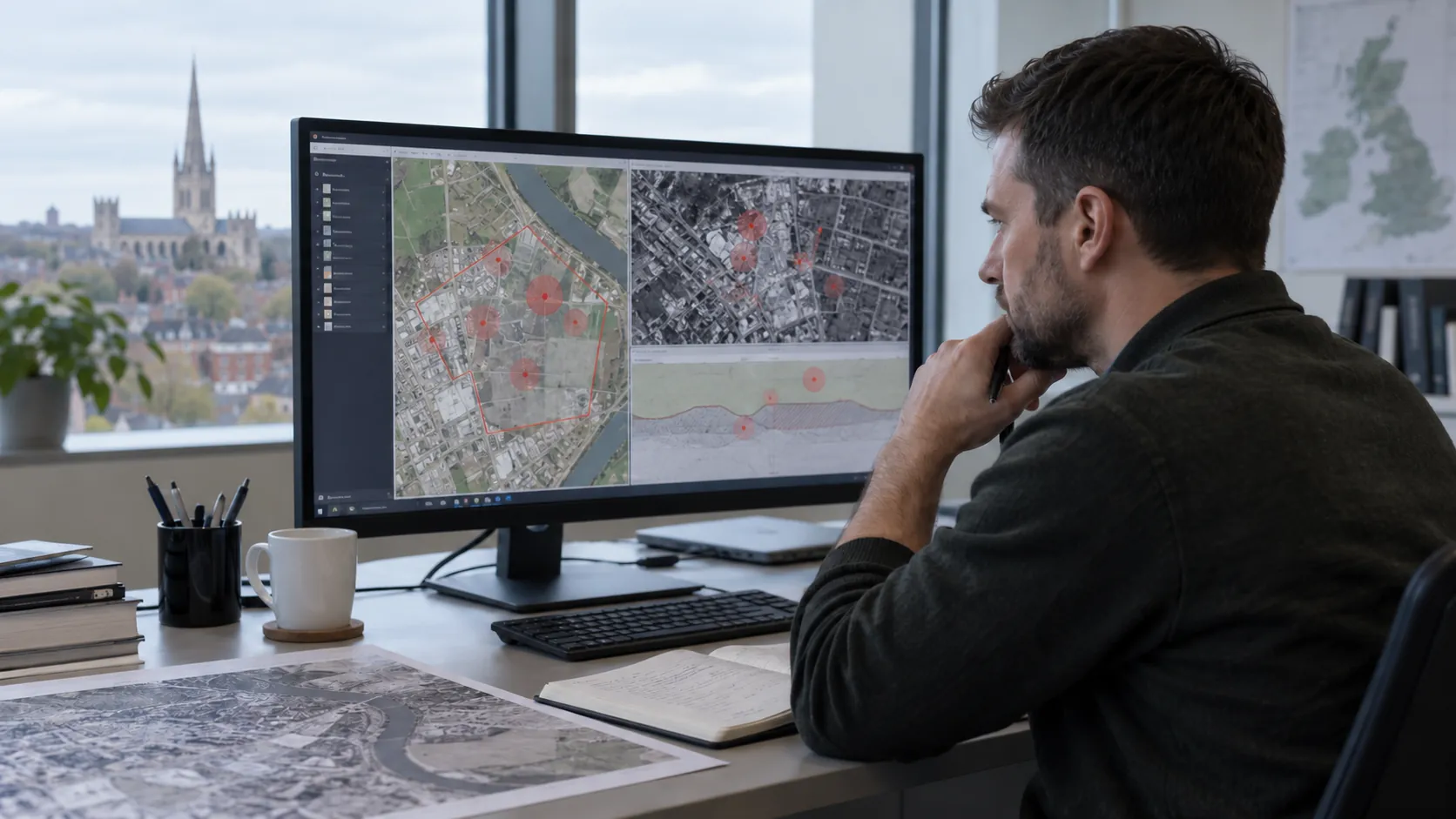
RMS UXO Expertise
Why Choose RMS UXO?
RMS UXO combines detailed historical research, UXO expertise and EOD knowledge to provide a comprehensive assessment of potential UXO risk. We understand that UXO risk management needs to balance safety, compliance, programme and cost.
Rather than treating an entire development site as having the same level of risk, we seek to understand the specific circumstances of the site and the works being undertaken. This allows us to provide practical recommendations that are proportionate to the risk identified.
When is a Detailed UXO Risk Assessment needed?
A Detailed UXO Risk Assessment may be recommended where a Preliminary UXO Risk Assessment identifies a potential UXO risk requiring further investigation.
Our Detailed UXO Risk Assessments can support a wide range of projects, including:
- Residential developments
- Commercial developments
- Infrastructure projects
- Construction projects
- Demolition projects
- Ground investigation
- Site investigation
- Piling projects
- Excavation and earthworks
- Utilities projects
- Renewable energy developments
- Civil engineering projects
- Major development sites
Identify the genuine risk. Understand where it exists. Plan the right mitigation.
RMS UXO
”
Going Beyond Historical Risk
Historical UXO risk does not necessarily translate directly into the same level of risk today. Subsequent development, excavation, demolition, remediation or other ground disturbance may have altered the conditions in which UXO could remain present, and the proposed works may only interact with a particular depth or part of the ground profile.
Where appropriate, RMS UXO can provide a bespoke 3D UXO risk map incorporating ground modelling. Rather than assuming that a single UXO risk level applies to an entire development, the 3D risk model can help identify areas where different levels of risk may exist across the site and through different depths, avoiding unnecessary surveys, site restrictions, costs and programme delays.
Detailed UXO Risk Assessment FAQs
Can UXO risk vary across a site?
Yes. Historical land use, previous ground disturbance, ground conditions and proposed works can all influence the potential UXO risk.
For larger or more complex sites, RMS UXO can provide a bespoke 3D UXO risk map and ground model where appropriate.
Who should commission a Detailed UXO Risk Assessment?
A DRA can be commissioned by developers, contractors, geotechnical consultants, site investigation companies, demolition contractors, civil engineering companies and other organisations planning intrusive works.
What is a Detailed UXO Risk Assessment?
A Detailed UXO Risk Assessment (DRA) is a comprehensive, site-specific desktop assessment. It examines historical, geographical, military and technical evidence in greater depth to establish the nature and significance of UXO risk to the proposed works.
What is the difference between a PRA and a DRA?
A PRA is an initial screening assessment used to identify indicators of UXO risk. A DRA goes further, using more detailed research and analysis to characterise the potential risk and provide an appropriate UXO risk mitigation strategy where required.
When is a Detailed UXO Risk Assessment required?
A DRA may be appropriate where a preliminary assessment identifies potential risk, where the site's history is complex, where proposed works could encounter a significant hazard, or where a stronger evidence base is needed for project decisions. RMS UXO can advise on the appropriate level of an assessment.
What information is used in a Detailed UXO Risk Assessment?
Depending on the site, RMS UXO may consider historic mapping, aerial photography, bombing records, military land use, former site use, bomb damage information, archives, geology, previous investigations, post-war development and the scope and depth of proposed intrusive works.
Do you need to visit the site to complete a DRA?
Usually, a DRA can be completed as a desktop study. A site visit may be useful for larger, complex or unusual sites where current ground conditions, redevelopment history or other site-specific factors could materially affect the assessment.
How long does a Detailed UXO Risk Assessment take?
Timescales depend on the size, complexity and availability of historical information and typically can be completed in 5–8 working days. RMS UXO can confirm the expected turnaround once the project scope and required information have been reviewed.
How much does a Detailed UXO Risk Assessment cost?
Cost depends on site size, complexity, location, available evidence and scope. RMS UXO provides project-specific quotations so the assessment is appropriately scoped to the actual site and proposed works.
Why choose RMS UXO for a Detailed UXO Risk Assessment?
RMS UXO combines historical research and analysis with specialist UXO and EOD knowledge. The objective is to provide a balanced, site-specific assessment of genuine risk and recommend proportionate action rather than automatically assuming extensive mitigation is required.
Start Your UXO Risk Assessment
Understanding potential UXO risk early can help you protect your workforce, plan your project and avoid unnecessary mitigation costs. If you are planning construction, site investigation, excavation, piling, drilling or other intrusive works, speak to RMS UXO about your site.